CourseForge
Environment Concept Creation
Environment Concept Creation
Couldn't load pickup availability
Share
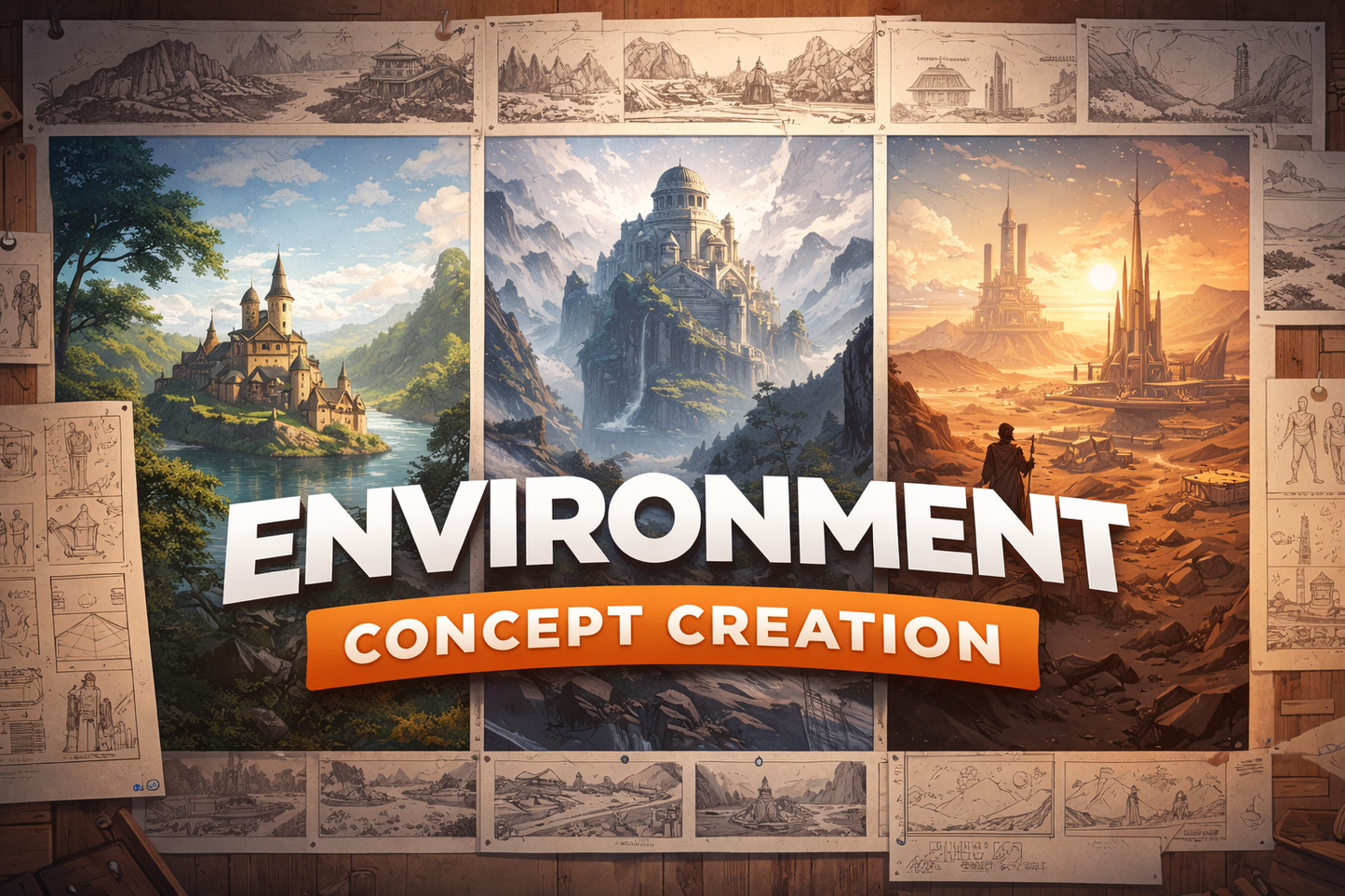
Environment Concept Creation is a professionally structured digital guide focused on the development of imagined spaces, locations, and visual worlds for concept art projects. It is designed for learners who want to understand how environments are planned, sketched, and developed in a more intentional and production-oriented way.
This course teaches the foundations of environment concept development through composition, scale, depth, perspective, mood, and storytelling. Students explore how to organize a scene so it feels believable, visually engaging, and useful within a larger creative project. The guide explains how foreground, middle ground, and background work together, how architectural and natural forms shape atmosphere, and how visual direction can guide the viewer’s attention across a scene.
Rather than treating environment drawing as simple landscape sketching, this course presents it as a practical design discipline. Learners study how places communicate purpose, history, tone, and function. They are encouraged to think about what a location is used for, who inhabits it, and how small visual choices can strengthen narrative identity. This makes the training especially valuable for aspiring game artists, film preproduction learners, and illustrators who want their environments to feel more immersive and conceptually strong.
The materials are organized to help students move from rough scene ideation toward more refined concept development. Learners are introduced to methods for testing layout ideas, improving spatial clarity, strengthening scene readability, and creating environments that feel coherent rather than visually random. Because the format is digital and self-paced, the course is easy to integrate into a personal art routine or broader professional training plan.
What’s Included:
Digital learning modules, environment sketching frameworks, scene-building exercises, structured examples, and guided methods for developing atmosphere, composition, and depth.
Format:
Digital course with downloadable educational materials and step-by-step concept training.
Result:
A stronger ability to design engaging environments with better perspective, clearer composition, stronger spatial structure, and more effective visual storytelling.